The Endless Road Trip: Barcelona

ES guest Tom Bolton joins us today to share his top 10 fave bites in one of the world’s best food towns…

As a port city on the Mediterranean coast, just a stone’s throw from France, Barcelona is amongst the most important culinary centres in Europe. The Catalan cuisine here is a unique fusion of flavors, combining not only the region’s rich mar i muntanya (sea and mountain) resources, but also tastes from nearby Italy, Africa, Portugal, and Greece. So no matter the time of day or part of the city you happen to find yourself in, there is always a wealth of edible delight around the corner.
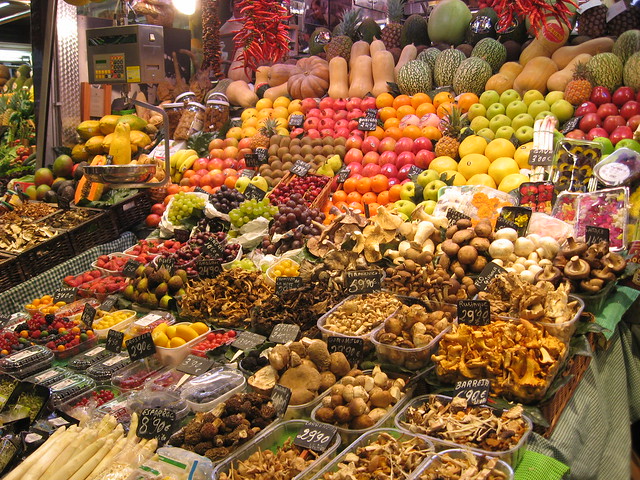
Food market, Barcelona

(Food market, Las Ramblas – Credit)

So…what to eat? Check out my top 10 favorite Barcelona bites.

1. Esqueixada

A delicious salad that makes for a perfect lunch on a hot day. The dish consists of raw shredded cod with tomato, onion, and bell pepper, and is often garnished with pieces of hard boiled egg. The texture of the shredded fish is particularly distinctive – as one cafe owner kindly explained, the name of the dish is derived from the Catalan word esqueixar, which means “to shred.”
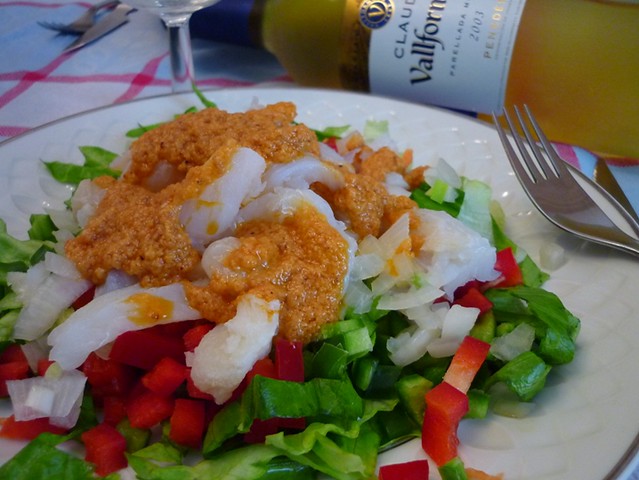
Esqueixada

(Esqueixada de Bacalla – Credit)

2. Escalivada

This dish is often served as a side to accompany grilled meats, but don’t be afraid to try it as a main course! A surprisingly filling meal, escalivada is prepared by grilling and smoking a variety of vegetables on the glowing coals of a wood fire. A hearty and filling dish, it commonly includes aubergine, sweet red peppers, onion, tomatoes, and garlic.
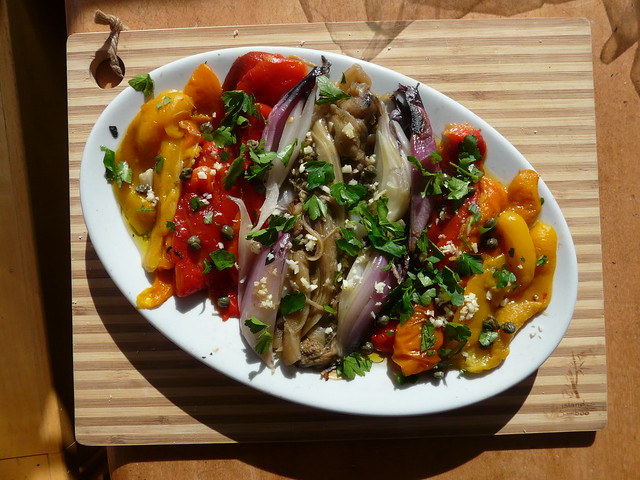
Escalivada

Escalivada with garlic and parsley – Credit

3. Cargols

Don’t be squeamish, this is the Catalan take on escargot! As with escalivada, this dish is widely available as both a main course and a side dish. The snails are cooked in garlic and vinegar on a coal fire, and are often served with a very spicy sauce. A true Catalan delicacy, this is a specialty that you definitely don’t want to miss.
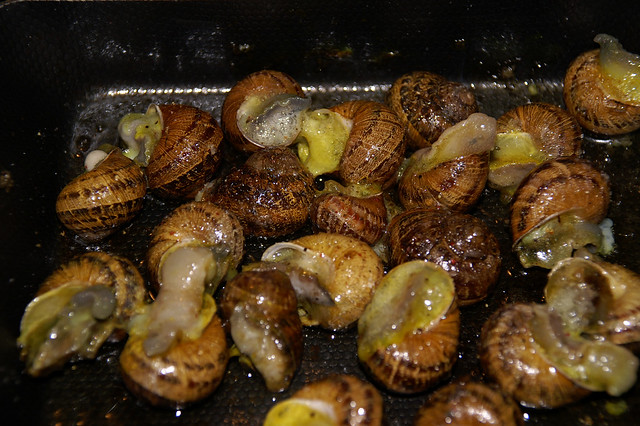
Cargols

Cargols a la llauna – Credit

Read More

Opening a Restaurant? Prepare for a Bumpy Ride

photodune-3887369-restaurant-xs
Who hasn”t thought about opening their own restaurant? The idea of creating your own little world where people come to drink, eat, and laugh at each other”s ill-timed jokes is intoxicating. Everyone has an idea of what the perfect restaurant should be. Among some amateur insights we often overhear:

  • “They need to hire more waitstaff.”
  • “This restaurant needs to run more happy hour specials.”
  • “Twelve dollars for an organic burger? That”s ridiculous.”
  • “Why aren”t there more attractive waitresses?”
  • “A thirty minute wait. This place sucks!” (although lines are usually an indicator of restaurant quality).
  • “You know what would be sweet? If there were HD screens on the table so we could watch football while we”re eating.”

The restaurant industry is one of those things where everyone has an opinion. Just because you eat out a lot doesn”t make you qualified to run a restaurant. If you spend your whole day on a computer you”re not going to suddenly call Hewlett Packard and start offering suggestions on how to make their screens better or how to improve their track pads. Why do we feel the need to offer advice to waitresses and complain incessantly when we”re unsatisfied with our restaurant experience? Opening a restaurant isn”t as easy as people think. Here are some reasons why close to 60% of restaurants close within three years of opening.

Read More

Malta’s Culinary Delights

ES guest writer Faith has some expert advice on what and where to eat in the beautiful Mediterranean country of Malta. Start planning your vacation now…

Stone Crab - Xlendi Bay, Island of Gozo

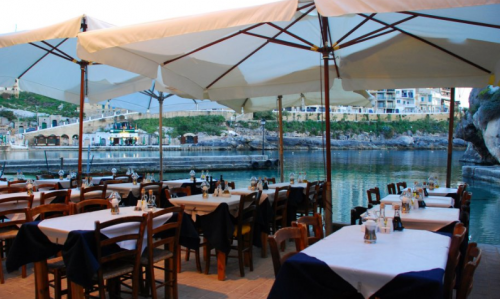
Maltese cuisine has Arabic, Sicilian, French, Turkish, Greek and British influences, stemming from a history full of invasions and occupations, making it a culinary concoction just waiting to be discovered. Surrounded by the clear Mediterranean Sea, Malta has a wide range of fresh seafood to enjoy in a traditional Lampuki fish pie, or simply barbequed alfresco style. Rabbit stew is the national dish – traditional and hearty. Whether you prefer surf, turf, or something in between, Malta is definitely a culinary destination.

Read More

How to Cook Poutine, Quebec’s Famous Dish

dive bar

An emblematic French Canadian meal, poutine was invented in the mid 1950s in rural Quebec–and no one agrees on who, exactly, came up with it first. But  one thing’s for sure: poutine is delicious. Here are tips on how to properly cook it at home.

First things first: What is poutine?

Poutine got more popular in the last few years, thanks to chefs such as Brian Henry and Martin Picard, who started treating it like the delicacy it truly is and brought it to a broader audience.  Poutine is quite simple and humble, and is just the assemblage of three ingredients: French fries and fresh cheese curds, topped with a thick, hot, tasty brown sauce. Voilà.

Cooking Poutine: The Fries

Ideally, you would pick Idaho or Russet potatoes: their taste and texture suits the poutine best. Cut them according to your preferences: I, for one, prefer small, crispy julienne fries, so I cut my potatoes in little sticks no larger than ¼ of an inch. But larger fries are good too. Fry your potato sticks in peanut oil until done.

The Cheese

Now this is a tricky one, for good cheese is key to great poutine. And cheese curds, for some reason, are not easy to find, depending on where you live. Here, in Quebec, you find them in almost every corner store, wrapped in little plastic bags. But elsewhere in Canada, it is not necessarily the case, and it is even worse in the States. Ask at your local cheese factory for information on where to get a hand on fresh cheese curds. Or, if you are up for it, you can even make your own.

In order to have the best poutine possible, the cheese online casino curds have to be extra fresh. How can you tell a fresh curds from a not-so-fresh one? A fresh one is looks kind of oily and squeaks notably when you chew it.

Read More

Top 10 Weird Foods From Around the World

ES guest writer Mireille tackles one of our favorite subjects….

Needless to say: one person’s delight is another one’s disgust. From an exterior and, let’s say it, North American point of view, some exotic dishes may appear weird, if not utterly disgusting. Here’s my top 10 weird foods from around the world. And be warned: The content of this post can be shocking for some.

1. Deep Fried Tarantula (Cambodia)

When you think of a big, hairy, venomous tarantula, chances are, the last thing on your mind is to eat it. Well, in Cambodia, fried spiders are a common and much appreciated delicacy. The spiders–“a-ping” or “Thai zebra” tarantula, a species that is about the size of a human hand, are tossed in garlic and salt before being deep fried until crisp. Most people only eat the legs and the upper body’s flesh–but the bravest also eat the abdomen, which contains a brown, runny paste and sometimes even eggs.

2. Century Eggs (China)

century egg

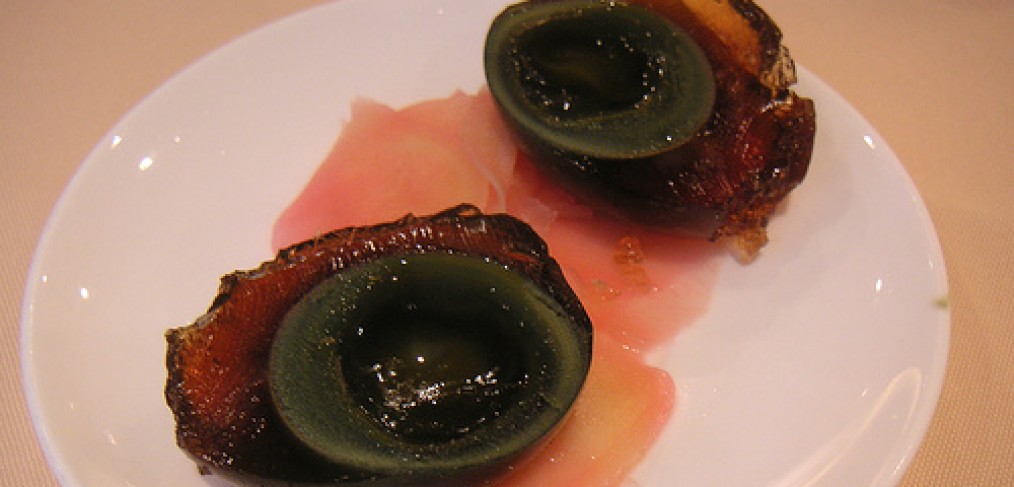
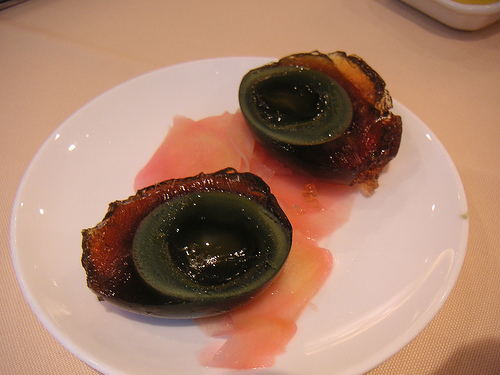
Century eggs—or millennium eggs, thousand-year-old eggs or pidan, whatever you call them—are quail, duck or chicken eggs preserved in a mixture of ashes, clay and salt for several months. In the process, the egg’s white turns to a jelly-like brown mixture, while the yolk turns into a green-ish or gray-ish cream. Century eggs emit a powerful smell of sulfur and ammonia, and their taste is strong and complex. (Photo: Wurzel)

3. Balut (Philippines)

Animal lovers, beware: You may be shocked by this one. Balut are fertilized duck eggs…Yes, this does mean that they contain a duck embryo. Balut are boiled and served with their shell: You pierce a little hole on top of the egg and sip the liquid contained inside. Once you have drank it all, you break the shell and treat yourself with an unborn baby duck. Balut are most often eaten when they are 17 days old: the chick is boneless and not yet really formed. But some prefer to eat it when it is as old as 21 days and has a beak, feathers and bones.

Read More

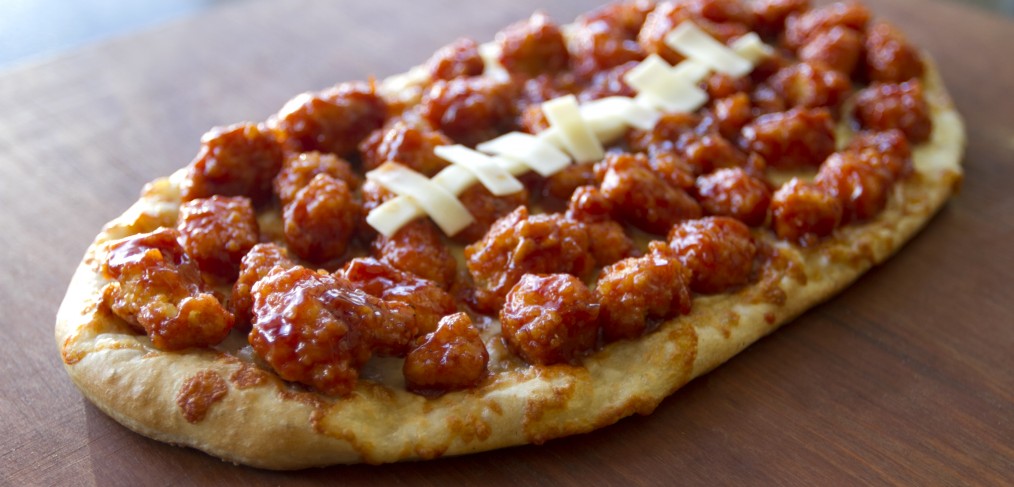
Super Snacks: Buffalo Wing Pizza

buffalo wing pizza

Decisions, decisions, decisions. They’re tough. Like, should I serve pizza or wings at the big game? Well, we’re here to solve at least that one for you.

Six-time world champion pizza chef (that’s a thing!) Bruno DiFabio is here to share the wonders of, yes….Buffalo wing pizza. BRING IT.

Bruno diFabio’s Buffalo Wing Pizza 

Read More

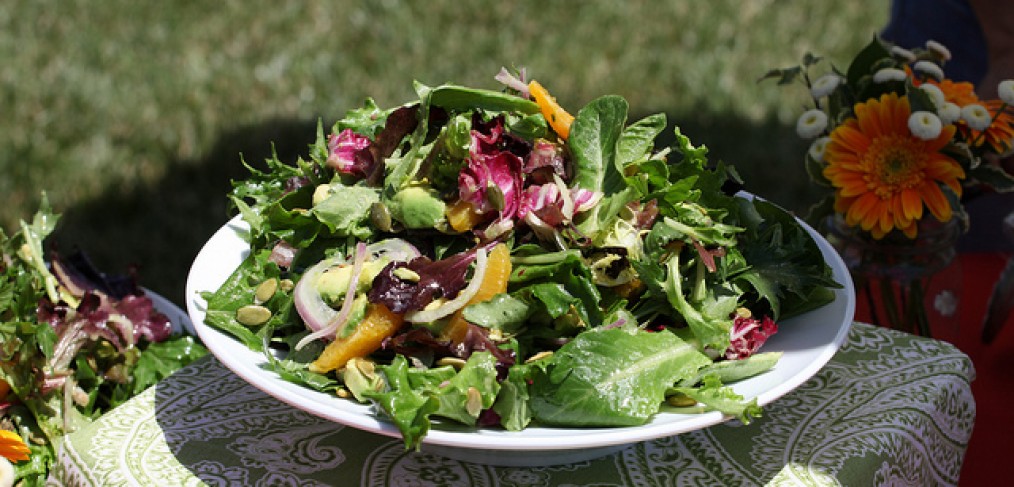
Autumnal Salad: Orange, Avocado and Cilantro

Guest blogger Jack Mauro brings ES a recipe that proves salad season doesn’t have to end.

Though the temperature is dropping lower and lower with each passing day, it doesn’t mean you have to rearrange your diet around chilis, stews and hot porridge. A delicious means of sneaking summer sunshine into the shortened days, autumnal salads are a light meal that whets an appetite as well as provides necessary nutrition for the upcoming season. We like incorporating fresh citrus into our salads as the boost in vitamin C can mean the difference between being knocked out by the flu, and winning the neighborhood snowball fight. Ramp up the flavor by making your own dressing from scratch—whisking gourmet vinegar and unusual olive oil together with subtle citrus tones.


Ingredients

  • 1 head green & purple lettuce, roughly torn
  • 2 oranges, peeled and cut into medallions
  • 1 avocado, pitted and sliced
  • ½ red onion, sliced thinly
  • ½ cup fresh cilantro leaves, roughly torn
  • ¼ cup sliced pitted green and black olives

Dressing:

  • 2 tablespoons blood orange olive oil
  • 1 tablespoons white balsamic vinegar
  • 1 teaspoon fresh lemon juice
  • 1 teaspoon honey
  • Sea salt and black pepper, to taste

Directions:

    1. Toss lettuce, oranges, avocado, onion, cilantro, and olives in a medium bowl
    2. Whisk together the dressing ingredients in a small bowl. Pour over salad and toss gently. Serve immediately. Makes salad for four.

(Photo: CAC)

« Previous
Next »