Rustic: Officially Jumped the Shark

We are in the age of rustic: girls with long, ratty hair and boys in shaggy beards. We are not polished. We are not all like Catherine, Duchess of Cambridge. Food has followed in the trend. Turn to any cooking show and the chef will surely praise her rustic pasta dish or rustic roast chicken. Nothing is refined. Everything has an air of ease. Unfussy is modern. The word rustic is used to sell. And just like hipster, it’s been used so much that it’s starting to not mean a thing.

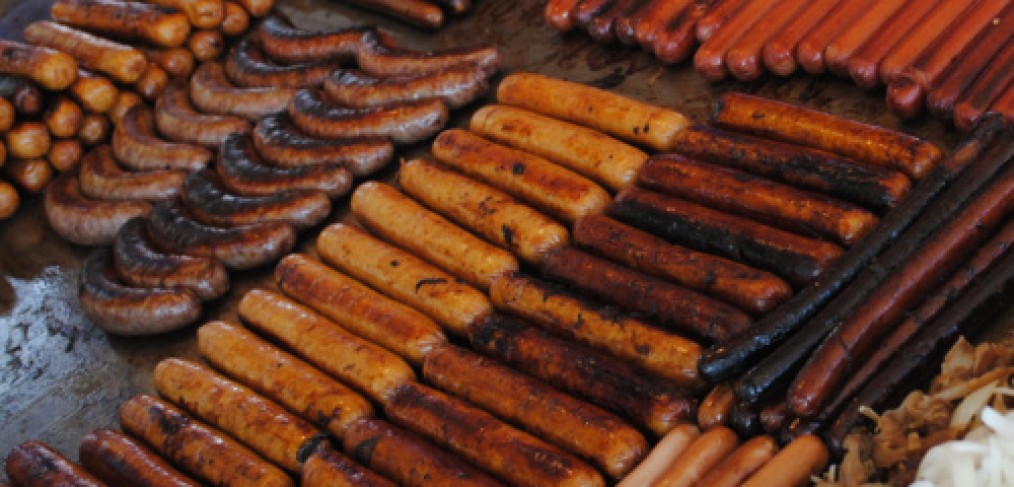
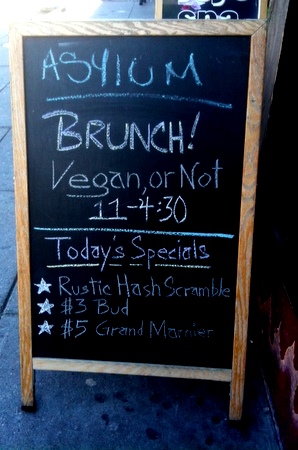
This sign in front of the DC bar Asylum exemplifies my point. Hash was never a dish put together with great care or excruciating detail. It’s a dish brought forth from the humble potato. And there’s absolutely no need for the word rustic to proceed the word hash. Hash is rustic. And rustic has jumped the shark.

Thursday Three: Burns Our Bacons

Is it just me, or have we not had a good ES rant in a bit? Don’t worry, we haven’t simmered down. We promise there is plenty more out there in the big, bad food world that burns our bacons. For now, enjoy three of our favorite BoBs from posts gone by:

Britannia: An Open Letter to the Salt and Pepper Shaker Filler Uppers

BS: Stop the Locawashing!

Gansie: There is No Such Thing as a Giant Cupcake

Oh, and a bonus rant: The king of having his bacon burned — Anthony Bourdain — has something to say about this year’s James Beard Award nominations, or as Tony calls it, the James Beard “Goat rodeo/awards ceremony/chef shakedown.”

What burns your bacon? Send us a food rant and if it rubs us the right way, we just might publish it!

(Photo: Stuart Spivack)

Meatless Monday: Will You Go Meatless For A Day?

Here we go again: conflict in the Middle East and the discussion incessant bitching about gas prices. I can hardly wait until the summer travel season. With a barrel of oil topping $100 for the first time since 2008 (my muscles start to twitch as I remember this era of my finance career), it’s a great time to talk about why our industrial meat system burns my bacon. I still wonder out loud why the average person hasn’t made the broad connection between meat consumption, the environment and the world’s resources.

Mark Bittman got it right three years ago in his New York Times article Rethinking the Meat Guzzler:

Growing meat (it’s hard to use the word “raising” when applied to animals in factory farms) uses so many resources that it’s a challenge to enumerate them all. But consider: an estimated 30 percent of the earth’s ice-free land is directly or indirectly involved in livestock production, according to the United Nation’s Food and Agriculture Organization, which also estimates that livestock production generates nearly a fifth of the world’s greenhouse gases — more than transportation.

As 925 million people in the world suffer from malnutrition he points out the following:

…about two to five times more grain is required to produce the same amount of calories through livestock as through direct grain consumption, according to Rosamond Naylor, an associate professor of economics at Stanford University.

This brings me to my question: will you go meat free for a day?

There are a swath of Meatless Monday participants around the country including Baltimore Public Schools, Sodexho, and University of California Davis. The effort, started in 2003, is in large part directed at public health (heart disease and high cholesterol), but I would argue that we should take a moment to examine our eating patterns.

Read More

Burns My Bacon: Cold Lettuce on Warm Sandwiches

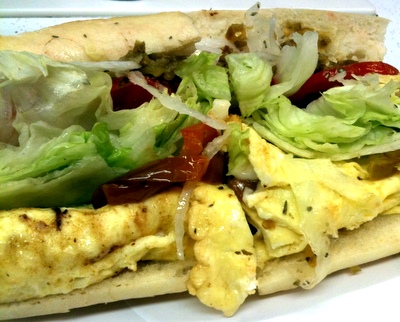
fried egg hoagie

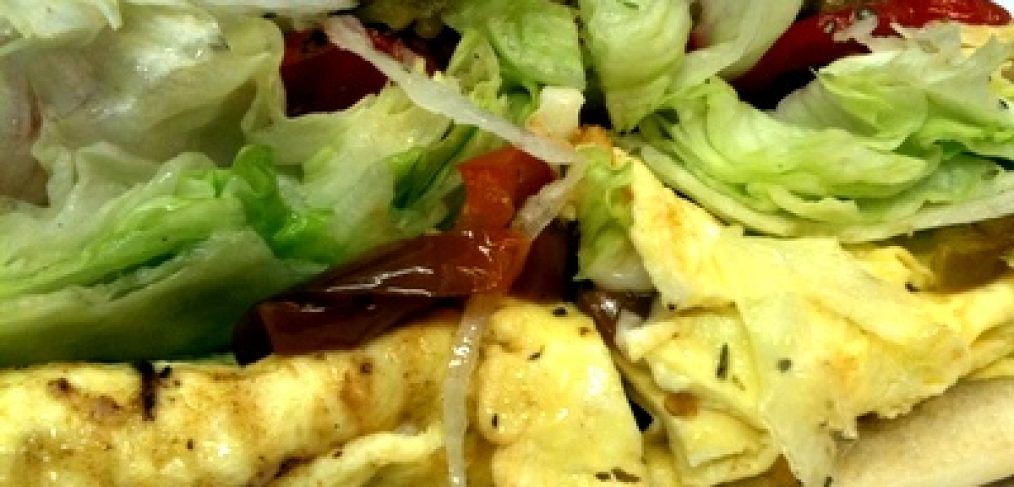
Exhibit A: Fried egg and provolone cheese hoagie with tomato, onions and…iceberg lettuce from Atlantic City’s White House Sub Shop.

Hot sandwiches should contain only ingredients that can taste good while hot or when turning limp from the warmth. I think spinach, arugula or a mesclun mix works well in warm sandwiches because they maintain their dignity when wilted. Iceberg lettuce, however, just turns soggy and gross. Iceberg lettuce is used for crunch and crunch alone.

There’s no real flavor living in those leaves, so when you put iceberg lettuce in a warm sandwich that dissolves its crunch, it leaves the lettuce totally useless. Iceberg then only takes up space which could otherwise be filled with warm sandwich-friendly ingredients, such as roasted red peppers, mushrooms and pickles.

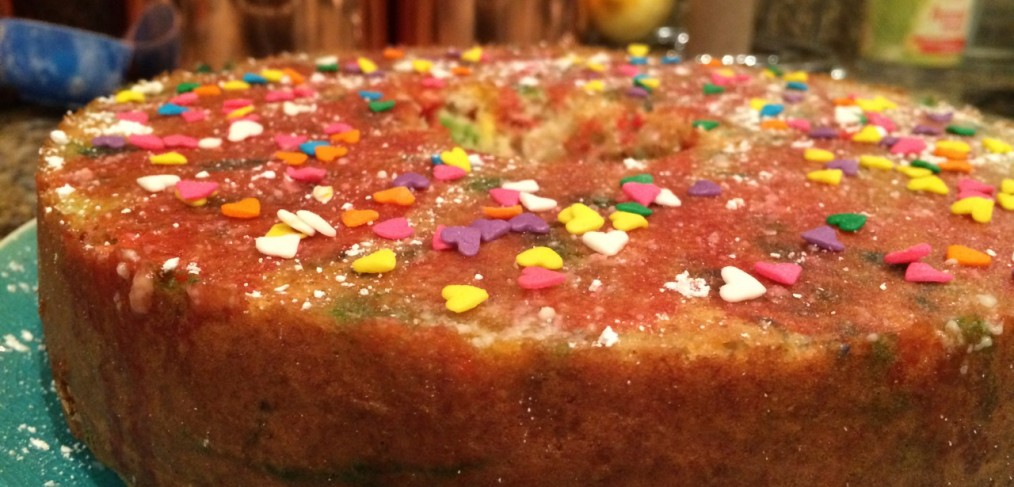
Strawberry Ice Cream Funfetti Cake

Burns My Bacon: This is Not a Cupcake, It is a Cake

Jumbo cupcake!
King size cupcake!
Tiny cupcakes won’t do, but 25 times bigger feeds the whole crew!

Cupcakes are tiny cakes, yes? But for some reason, the logic doesn’t feel right the other way around. There’s no such thing as a giant cupcake. There’s just not. It’s a fucking cake.

Burns My Bacon: Locawashing

181074044_ec18af3633

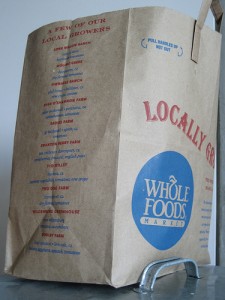
I don’t have to tell any of you that local food is hip. Duh. From coast to coast, and even in between, grocery stores, restaurants and bars are going out of their way to broadcast their locavore credentials. We’re certainly fans of the trend here at ES, although I’m not one of those zealots who has sworn never to eat a banana again. But I do like going to a restaurant and knowing they’re not going to serve me a tomato that’s been shipped across the country. However, the veggie gf recently pointed out the flaws in a phrase we see printed on so many menus nowadays:

Local ingredients are used whenever possible.

On first glance, that sounds great, right? But when you think about it, it doesn’t actually mean anything, because everyone’s definition of “whenever possible” is different. Does it mean 80 percent of your ingredients are local? 90? 50? 20? Does it mean you use all local foods except for in those rare instances when there’s something crucial that’s not available in your region? Or does it mean you use local foods when it’s easy but not when it’s difficult?

Read More

Industrial Food Complex

Warehouse

Editor’s Note: As you may remember, ES contributor forkitude has given up the corporate life to take the plunge into culinary school.

Part of culinary education is learning how to purchase food. Therefore, I found myself in a food Home Depot during my walking tour of the 245,000-square-foot Sysco warehouse in Lincoln, NE.

When did food distribution become so mechanized and industrial?

Sysco was started in the 1970s by several producers in order to distribute different food stuffs to buyers on the same truck. This idea has evolved into a food machine. And it felt like a machine.

We walked past boxes labeled “fresh cut vegetables.” Maybe the English language needs a new definition for the word fresh. “Still consumable” perhaps?

Read More
« Previous
Next »