Tenerife’s Top Five Tapas

These days, it seems like there’s a tapas restaurant in every city in every country on earth—we even found one in Iceland a few years ago—but when I asked my fellow passengers on our way to Tenerife (in the Canary Islands) for recommendations for tapas restaurants, I got a resounding “Qué?”

This is because traditionally, tapas are not considered a Canarian dish, even thought the Canary Islands are technically part of Spain. Visitors travel to the Canary Islands in their droves, thanks to the abundant cheap flights to Tenerife and Lanzarote, and they have always been presented with plenty of delicious traditional local dishes such as fish casserole to enjoy along the beachfront.

But in recent years tapas have become more common here, as it is in mainland Spain. So with this in mind, here are my top 5 tapas dishes that have a Canarian twist…

1. Pimientos de Padrón
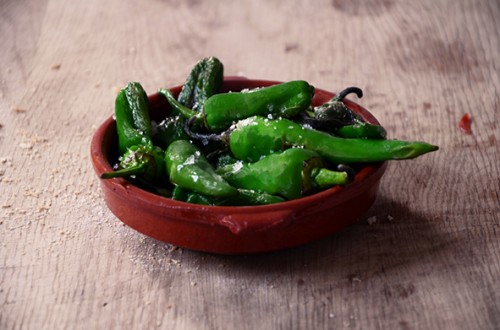
One of the most simple tapas dishes, pimientos de padrón is a special variety of pepper, cooked in oil and sprinkled with rock salt. However, beware the sting in the tail, as while most pimientos are very mild, you get the occasional surprise spicy one that will knock your socks off, so be careful!

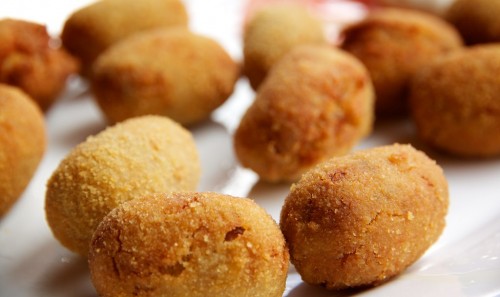
2. Croquetas Caseras
(Photo: Pincas Photos)

(Photo: Pincas Photos)

Croquetas caseras are small fried balls of almost any filling, usually white fish or ham mixed with potato, but many fillings are possible. We found croquetas caseras that were filled with chicken, tuna and spinach as well, and not only are they delicious, they are also very filling.

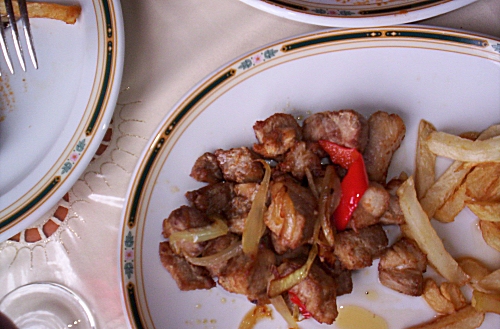
3. Carne Fiesta
(Photo: Pamela Stocks)

(Photo: Pamela Stocks)

A dish that will tingle your tastebuds, carne fiesta is the name given to small cubes of pork that has been marinated in garlic, thyme, oregano, spicy peppers, salt, paprika, wine vinegar and white wine. The cubes are then fried to make deliciously tender and moreish meat treats.

Read More

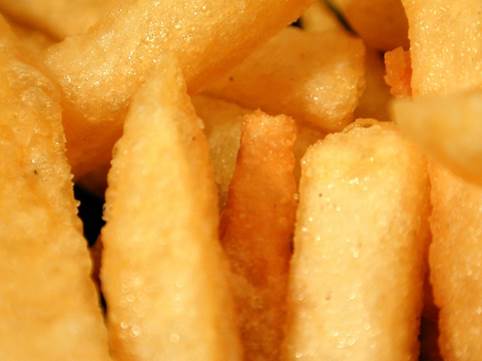
The Secret History of French Fries

image001

Few things get the mouth salivating like a plate of deliciously crispy French fries. Whether you’ve enjoyed salty, mayonnaise-covered fries from a ‘Patat’ stand in Holland, where the potato is revered almost as much as the Dutch royal family, or had a go at making them yourself, they’re a staple that both food snobs and ready-made fans can agree on.

But the history of the golden French fry is complicated. There have been rows over which nation invented them (it would be too obvious if they were French right?), wars that made them popular, and even a marketing campaign fronted by Marie Antoinette.

So here’s our whistle-stop tour of the secret history of French fries. We’ll take you from the discovery of the potato, right through to how the likes of McCain French fries became so popular today.

Read More

I’m a Dublin Dr. Pepper

Dr Pepper

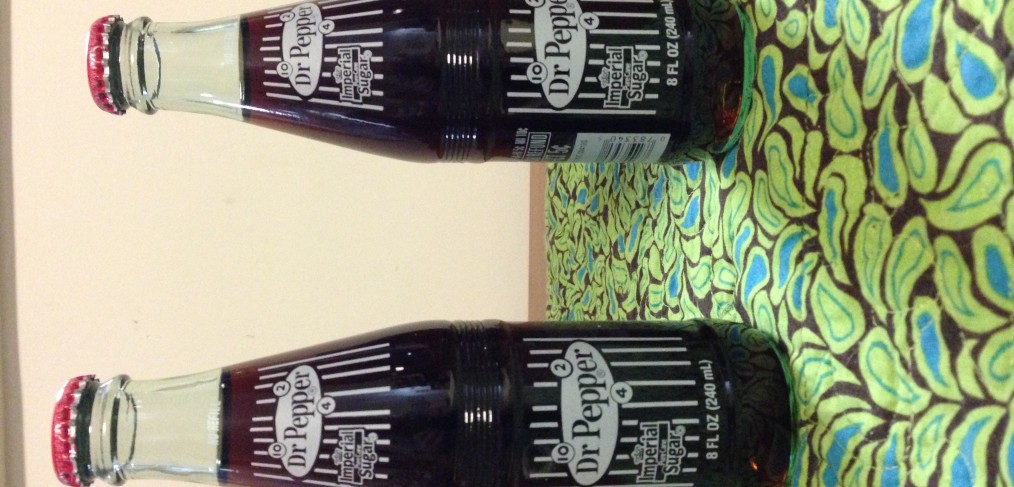
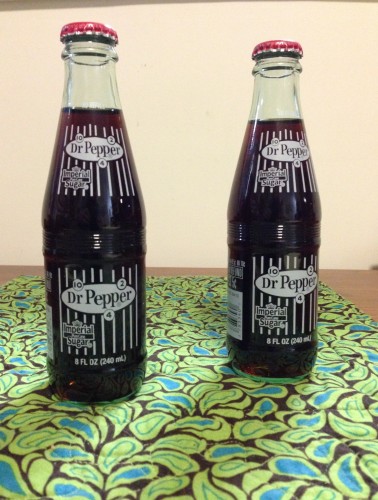
If you’ve been to any hipster-affected Mexican restaurants in the past five years, you know all about the phenomenon of “Mexican Coke.” Imported from south of the border, Coke bottled in Mexico (and many other countries) is made with real cane sugar instead of high fructose corn syrup and thus tastes, well, a little bit more like there’s real food in it than regular Coke does. While no one drinks Coca-Cola for its healthful properties, it’s hard not to agree that the natural-sugar stuff is tastier. But did you know there’s also a “Mexican” Dr. Pepper, and that it can be had without going (quite) all the way to Mexico?

You see, when the soft drink industry switched to HFCS in the 1970s, one bottler in Dublin, Texas stood their sugary ground and kept making Dr. P with the natural stuff. Fast forward four decades and “Dublin Dr. Pepper” had become a local Texas institution. DP aficionados flocked from all over to sample the stuff, enthusiasts even began trading it over the Internet, and Dublin Dr. Pepper began distributing it further afield.

When the behemoth corporation that owns Dr. Pepper found out, they wisely capitalized on people’s passion for real-sugar soda and started distributing the good stuff all over the country, even though it costs them an extra few cents per can to make. Ha! I’m just kidding of course. They shut that shit down. Dr. Pepper Snapple Group (a name that just conjures up some kind of vomit-y sorority party jungle juice mix) sued Dublin Dr. Pepper for distributing their sugary soda and taking business away from other bottlers, who didn’t want to have to compete with the superior product.

The result: Today, the “Dublin Dr. Pepper” company no longer is allowed to make Dr. P, instead launching their own line of new sodas. And you won’t find sugar-sweetened Dr. Pepper popping up near you anytime soon. However, because the good drinkers of central Texas were already addicted to the real stuff, the Dr. Pepper Snapple group does make small batches of sugary DP  (now without the “Dublin” label) strictly available only in that area. So if you happen to be driving through Dublin, Texas — conveniently located not really near anything at all — you can pop into a gas station, as I did recently, enjoy a small glass bottle of sugary Dr. Pepper, and dream about a day when American food is made from real food again.

In-Depth: R.I.P. DP, 1891 – 2012 [Texas Monthly]

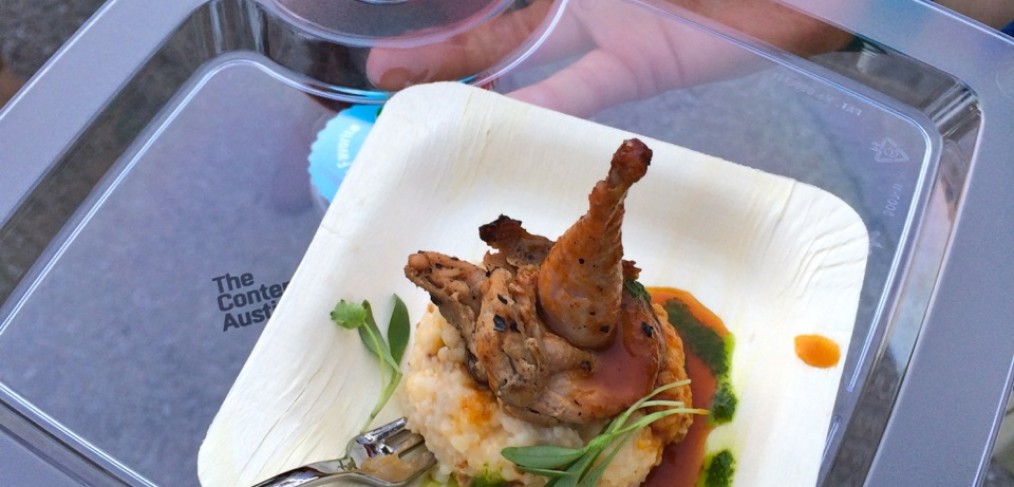
Quail and Grits from US Food

La Dolce Vita Food and Wine Festival

La Dolce Vita Laguna Gloria

It’s common knowledge that Austin’s culinary scene has been blowin’ up. We have Top Chef Texas winner Paul Qui and his Asian fusion empire, Austin Food & Wine Festival, and the flagship Whole Foods. Not to mention the wonderful restaurants constantly cropping up, and all the famous barbecue.

And of course… LA DOLCE VITA. I’ve always wanted to attend La Dolce Vita since I moved to Austin and first heard about this glorious event. The magnificent Laguna Gloria, an absolutely beautiful outdoor venue, is swarmed by over 50 of the hottest Texas restaurants and wineries, and attendees are tasked with the stressful chore of tasting everything. And by “stressful” I clearly mean “AMAZING.”

Whoever said the best things in life are for free has obviously never attended a high-end culinary event, because tickets to La Dolce Vita will set you back $150 (or $200 for a VIP ticket including access to an exclusive cocktail lounge) but it’s worth it if you want to sample the cooking of some of the region’s best chefs. If you, unlike me, don’t like throwing large sums of money at indulgent dining opportunities, you’ll be happy to know that the ticket price also goes to support the arts—all proceeds go to The Contemporary‘s educational programs.

By the end of the event, I was Thanksgiving-level full. (And we all know I can EAT on Thanksgiving.) Seriously, I just kept stuffing myself until it was over. I felt like I was walking through one of those big, elegant Top Chef elimination events where all the cheftestants are vying for best dish and shoving beautiful plates of food at the judges. Just call me Padma!

Read on for some photo highlights of my oh-so-delicious evening:

Read More
Millionaire's Bacon

Bacon Fit for a King…or Millionaire

Millionaire's Bacon

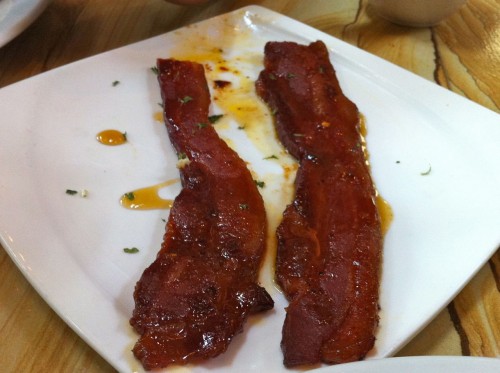
I’ve written about the array of glorious brunch options in San Francisco before, so I’ll get straight to the point: I was back in the Bay Area last weekend and of course I enjoyed MORE brunches with MORE bottomless mimosas and MORE benedicts and MORE bacon. Millionaire’s Bacon, to be exact.

You can find this delicacy at a good handful of restaurants in San Fran, but we first encountered it at Blackwood, an “American Thai Fusion” restaurant in the Marina area. In spite of the name, Millionaire’s Bacon will just set you back a couple extra dollars on top of your $10-20 brunch plate, so it’s not a bad deal. Especially considering the fact that this is no ordinary bacon—it’s super thick and meaty, coated in sweet maple syrup and honey, liberally sprinkled with spicy red chile flakes. After this flavor explosion, I’m never eating regular bacon again.

You can make your own, too! You definitely don’t have to live in San Fran (and you don’t have to be a millionaire, obvs) to enjoy this ultra-rich bacon.

Millionaire’s Bacon

Read More

Warm Beaches, Hot Food: Eating in Goa

warm-beaches-and-hot-food-in-goa2

Kendra P. continues our eating around the world series with news of food from the Goan Peninsula.

Situated on the west coast of India and lapped by the waters of the Indian Ocean, Goa is perhaps best known for its inviting palm-fringed beaches and many luxury resorts. However, it’s also a paradise for food lovers, offering an astonishing variety of delectable, fiery local dishes that titillate the palate and make you regret when it’s time to leave.

The history of Goa has left its indelible mark on the local cuisine. Goa is an ancient place, with the earliest traces of human habitation dating back nearly 30,000 years. The Sumerians came to Goa in 2200 BC, followed by Dravidians from the Deccan Plateau. Many other peoples came to Goa over the following centuries, and by the 14th century, it had come under the control of the sultans of Delhi. By 1510, Goa was under Portuguese rule—and continued to be so until 1961.

The Portuguese presence gave rise to one of the best-known dishes from the region: vindaloo. The name is actually derived from that of a Portuguese dish, carne de vinha d’alhos, which is pork prepared with wine and garlic. In Goa, the recipe was modified by replacing red wine with palm vinegar, and adding Kashmiri chilies and other spices. Interestingly enough, the fiery dish also became a staple of Anglo-Indian cuisine, although the variety you can find in UK curry houses today is substantially different from the original. One thing you will often find in a Western vindaloo is potato, which you would never find in Goa. This is due to a misinterpretation of the name—aloo means potato in Hindi.

Read More

From Sardines to Sausages: Exploring Portuguese Cuisine

ES guest writer Faith brings us the food travel lowdown on the savory land that is Portugal.

From freshly caught grilled sardines and salted dried cod dishes to hearty smoked sausage stews and the famous piri-piri chicken, Portugal has some seriously flavorful food. Paprika, garlic, bay leaves, chili and olive oil are popular additions to many Portuguese dishes, and the resulting flavors will leave you coming back for more. These popular dishes make this a culinary destination that deserves to be better known.

1. Pasteis de Nata – Portuguese Egg Custard Tarts

Pasteis de nata

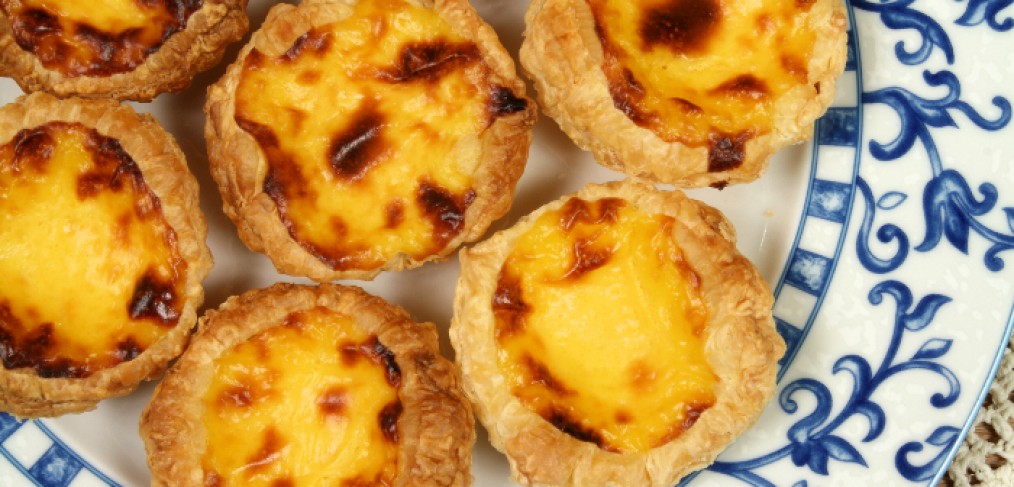
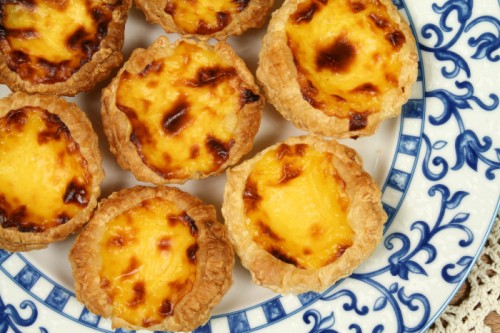
The Pasteis de Nata is a creamy, flaky, egg custard tart, topped with sugar and cinnamon. The tart originated in Lisbon in the 18th century at a bakery in the Santa Maria de Belem parish, and the bakery itself has now become a popular tourist attraction, serving over 10,000 tarts a day. Lines are inevitable, but it’s well worth the wait to try this distinctive treat from its original source.

2. Pão – Bread

Traditionally, Portuguese meals were served on a slab of crusty bread to soak up all the juices and to provide a filling meal. Today, plates have replaced this method of serving food, but bread is still an integral part of most meals. Bread also varies widely from region to region, with each having its own speciality. Pão de Centeio is predominantly found in the North—this is a rye bread, which is dark and dense. The sweet Bolo de Ferradura loaf can be found in the Ribatejo region, combining unusual flavors such as star anise and lemon. It is often horseshoe-shaped and served at weddings to bring good luck. Pão com Chouriço is the Portuguese substitute for the American hotdog, but more delicious as it is made with Portuguese smoked sausage and fresh dough.

Read More
« Previous
Next »